

This Week in Review: Asia Is Melting. Here’s Why That’s Everyone’s Problem | Starbucks Is Betting You’ll Keep Paying More | The Job Market Is Ghosting Everyone Right Now

Sponsored By:


Quick Bites:
Travel: Boeing workers go on strike.
On early Monday morning, more than 3,000 Boeing “machinists” (the unit that builds fighter jets) officially went on strike.
Seems like contract negotiations with the air giant fell apart faster than you can say “turbulence.”

Ugh all this plane news is freaking us out. We refuse to board a non-woke flight. We want to see atleast 3 genders in the damn cockpit from now on.
PS. If you’re on a Boeing flight it is no longer cringe to clap when the airplane lands guys!!

🧾 What went wrong?
According to CNBC, Boeing offered a four-year deal that included:
-A 20% wage increase
-Continued 401(k) contributions
-Some sweet talk about future incentives
However, the real issue is that workers wantguaranteed retirement benefits- not just short-term gains.
Boeing nixed a traditional pension plan years ago, and employees are now asking to bring it back into the cockpit.

🔧 Background:
This particular union, “IAM District 837”, hasn’t gone on strike since 1996, when machinists grounded planes for a record 99 days.
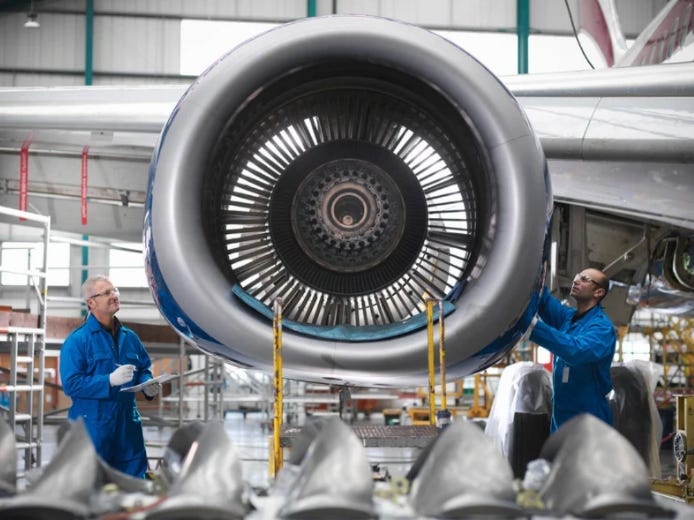
The facility produces F-15 and F/A-18 fighter jets- no biggie, just some of the most expensive and complex hardware in the US military. So… delays here are the kind of thing Pentagon does not love.
🚨 Boeing’s Response:
A spokesperson said the company has already activated a “contingency plan” to maintain operations.
Translation: “We’ve entered corporate damage control mode and are frantically Googling how to build a jet.”
Contingency Plan™️:
Step 1: Hope
Step 2: MIT Interns
Step 3: Have AirBus explain torque ratios

This comes at a rough time for Boeing, which is still fighting off backlash from its recent crashes and safety checks.
Labor actions are heating up across the world for big companies- from Hollywood to warehouses- and workers are done accepting “vibes” as compensation.

Work: Summer job market slows down.
A chill has settled over the job market this summer, as those already unemployed find themselves wondering if they’ll rejoin the labor force.
While overall unemployment isn’t spiking, the number of people who’ve been jobless for 27 weeks or more has quietly climbed to 1.8 million- the highest it’s been (non-pandemic) since 2017.
Umm to put that in context, 27 weeks is not just a “between jobs” time- that’s a “I updated my résumé three times and even added a Canva infographic” kind of situation.
Young people are stuck in career limbo, and the “Find Jobs” tab is starting to feel like a mood board of rejection.
🤖 Why the freeze?
Businesses are stalling on hiring, due to two major factors
- AI (“Why hire someone when ChatGPT can write the report and bring me coffee and my banana nut muffin?”)
- Rising import tariffs are making businesses extra cautious with costs- nobody wants to commit to new salaries in such a volatile conomy
💸 The Real Damage: It’s Not Just About Paychecks
Long-term unemployment has lasting effects- it chips away at your future income, shrinks your retirement savings, and delays key life goals:
- 📉 Fewer raises in future jobs
- 🏡 Pushing back home buying
- 🧓 Smaller retirement cushion
- 💔 Ghosted by LinkedIn and life

Job Market 2019: “You get a job! You get a job!”
Job Market 2025: “No one’s hiring, Karen. Start a podcast.”

AI: ChatGPT unveils mental health tools.
OpenAI is adding mental-health features to ChatGPT– so if you’ve ever trauma-dumped into the void at 3 AM, congrats! The void might now gently suggest a breathing exercise.

💡 Here’s what’s actually changing:
🧠 Emotional Wellness Detection
- OpenAI says the model will soon be able to recognize patterns that might indicate emotional or mental strain– including language that suggests anxiety, burnout, or crisis.
- While it’s not a licensed therapist, it will gently redirect you toward helpful resources or suggestions to pause.
⏱️ Break Reminders
- ChatGPT will now encourage users to take breaks after extended sessions.
- You’ll start seeing pop-up reminders if you’ve been chatting too long- because apparently, your mental health matters more than getting the perfect thong bottom for Capri
📲 Designed for Digital Balance
- These features are part of a bigger push by OpenAI to support “more mindful use of AI.”

📈 Now the numbers, because we love a flex:
- 700 million weekly active users. As of this week, ChatGPT has hit 700M WAUs, up from 500M in March
- That’s 4x growth year-over-year, even faster than Instagram in its early days
- It’s currently one of the fastest-growing consumer apps of all time
- More than 92% of Fortune 500 companiesare reportedly using OpenAI’s tools internally

Background: Within five days of OpenAI launching ChatGPT, its user count crossed 1 million. In comparison:
Time it took to reach 1 million users:
Netflix- 3.5 years
Facebook-10 months
Spotify- 5 months
Instagram- 2.5 months
ChatGPT- 5 days
Umm Therapy is expensive but venting to ChatGPT is free. The choice is clear.

Health : Have any of you been getting increased headaches?
Climate change has led to more unpredictable weather, leading to migraines, NBC News reports.
Thanks to the massive drop in air pollution the land of Mordor is finally visible again from the Shire

There is evidence that extreme weather, like extreme heat or cold, can trigger headaches.
These weather changes may trigger a migraine by disrupting the balance of chemicals in the brain, like serotonin, according to the Mayo Clinic.
Sorry at the ER, we don’t treat migraines with drugs that help migraines. You could be a crackhead for God sakes!
How about ineffective crap, a pat on the back and MAYBE not living in a wasteland or what you call a “city” which has air pollution spiked 100x beyond breathable levels
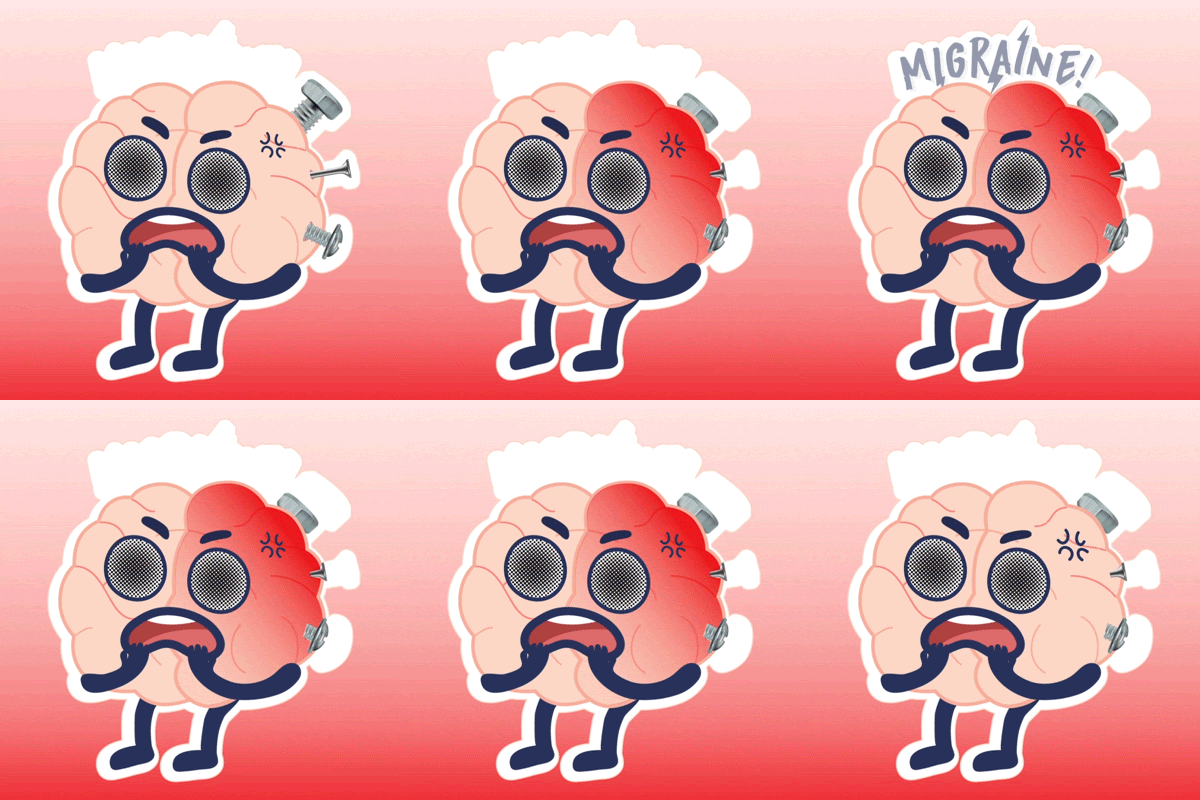
In the US especially, headaches caused by climate change has impacted people’s daily activites- including missing social events or being less productive at work, according to a recent study.

How to treat migraines, reported by NBC:
Over-the-counter supplements, prescription medications, self-administered injections, wearable devices.
Not all treatment requires medication. Basic everyday conditions- dehydration, sleep deprivation, skipping meals and emotional stress, can trigger symptoms.
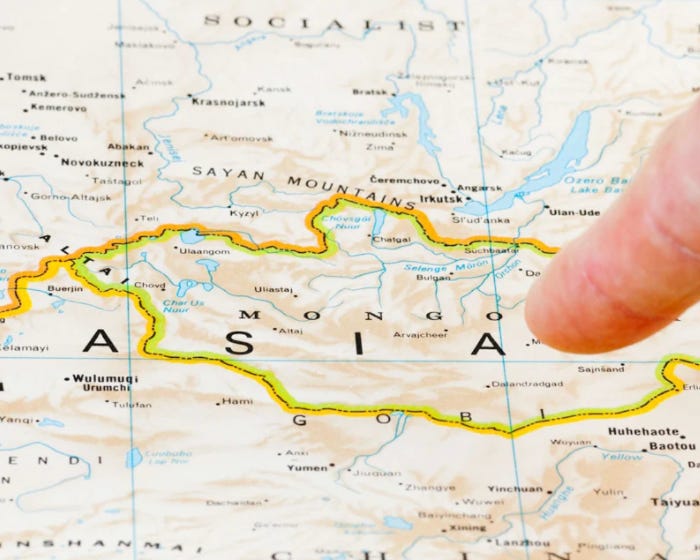
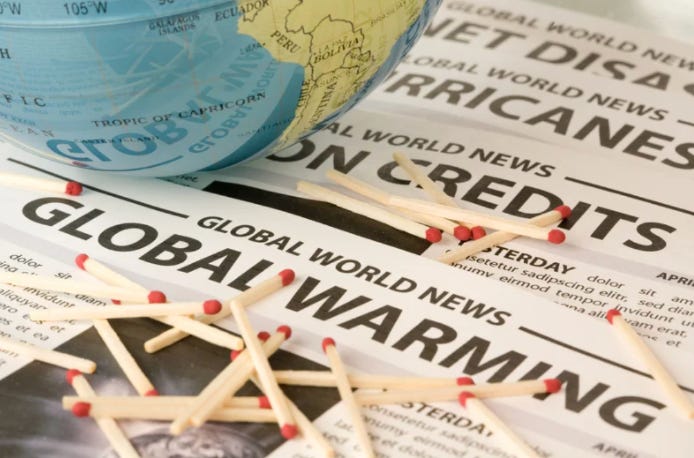
Speaking of Climate Change: Asia is heating up, CNN reports.
Asia is warming faster than the global average– and the consequences may be far more catastrophic than we’re prepared for.

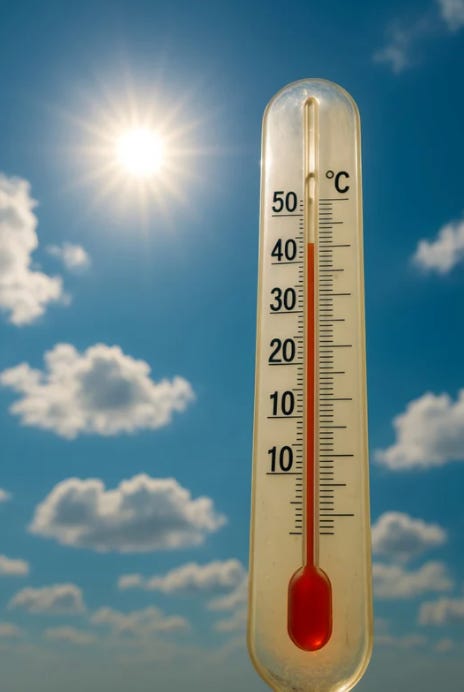
According to the World Meteorological Organization, 2024 and 2025 were Asia’s warmest years on record.
Average temperatures across the region have been rising almost twice as fast as the global mean, putting billions at risk- not just from heat itself, but from everything it disrupts.
🌡️ Why Is Asia Warming So Quickly?
- Urbanization: Cities across Asia are expanding rapidly, creating “urban heat islands” where concrete and glass trap warmth
- Air pollution: Ironically, some forms of pollution can block sunlight and temporarily cool regions
- Climate sensitivity: Many parts of Asia, particularly South and Southeast Asia, are geographically more sensitive to climate shifts due to monsoon cycles, sea-level rise, and proximity to the equator.
🚨 What This Means
- Unlivable cities: Temperatures in Delhi, Bangkok, Manila, and Shanghai have already topped 45°C (113°F) in some cases. Prolonged exposure isn’t just uncomfortable- it’s deadly
- Water and food insecurity: Heat disrupts agriculture and depletes water reserves- especially in countries already struggling with food prices
- Mass displacement: Rising sea levels and failing infrastructure could displace millions across low-lying regions like Bangladesh and coastal China.

Climate scientists warn that these heatwaves are no longer anomalies- they’re the new baseline.
And without urgent policy shifts, emissions cuts, and regional cooperation, the situation could spiral into an irreversible humanitarian and economic crisis.
Quicker Bites:

- Markets are bouncing back after Fed signals that interest rate cuts could be coming soon.
- UN negotiators in Geneva are pushing for a global plastic-pollution treaty.
- New US tariffs on over 90 countriesannounced- tariffs on Canadian imports rise to 35%; major trade measures spark legal scrutiny.
- Famine conditions are unfolding in Gaza, with children and pregnant women most severely affected amid shortages and blocked aid.
- Chinese exporters rethink Southeast Asia investments, as new US tariffs disrupt supply chain strategies.




 Business Eye
Leave a comment